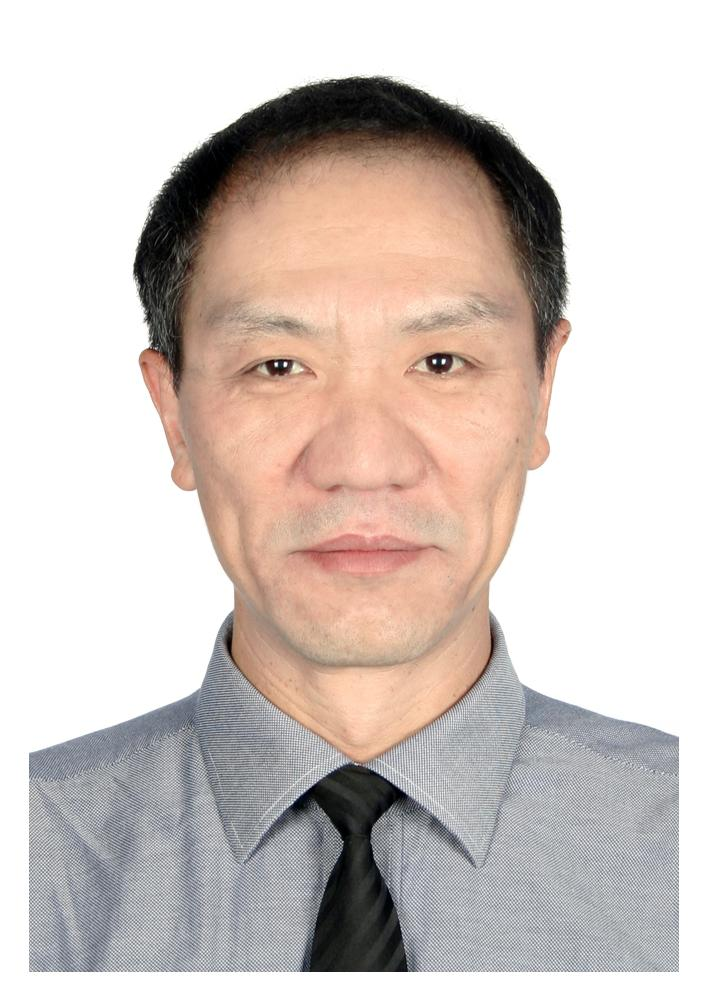
Wu, Zhongliang (Z. L. Wu) got B. Sc. (1985), M. Sc. (1988), and Ph. D. (1991) degrees from Peking University, Beijing, China. He has been working in the State Seismological Bureau (SSB, later China Seismological Bureau, CSB, and now China Earthquake Administration, CEA) as post-doc (1991~1993), associate research scientist (1993~1996), and research scientist (1996~2002; 2008~2017) of its Institute of Geophysics, and research scientist of its Institute of Earthquake Forecasting (2017~2028). From 2002 to 2008, he worked in the Chinese Academy of Sciences (CAS) as professor of its Graduate School (now University of CAS). He has been serving as deputy director (1996~2002) and director (2004~2017) of the Institute of Geophysics, CEA, and director of the Institute of Earthquake Forecasting, CEA (2017~2021). In 2015 he was conferred the fellow of the International Union of Geodesy and Geophysics (IUGG) ‘for exceptional research contributions and international cooperation’.
Wu’s research interests are seismological monitoring and earthquake forecast, with application to the reduction of earthquake disaster risk. In particular, Wu’s research is featured by an international and interdisciplinary perspective.
1 Capacity building for earthquake disaster risk reduction
Since the end of the 1990s, one of the significant developments in China in earthquake science has been the nationwide transition from analogue to digital/broadband seismology. This is actually a multi-level collective effort including many people, groups, and institutions. Among these people, groups, and institutions, the Coordination Group for Seismological Observation and Interpretation of CEA, with Wu as its group leader from 1998 to 2018 and advisor since 2018, played an active role in the technical and strategic consultation. To promote the using of digital broadband seismic data to earthquake disaster mitigation, Wu proposed the concept ‘new generation earthquake catalogues’ which includes more earthquake parameters, and introduced ‘apparent stress’ to the analysis of earthquake hazard[1].
Wu joined in several projects, facing to the capacity building in earthquake science. From 1993 to 1996 he served as vice chief of the Research Division of the Sino-US Cooperative China Digital Seismograph Network (CDSN, phase II), Institute of Geophysics, participating in the United Nations Conference on Disarmament (UNCD) ad hoc Group of Scientific Experts (ad hoc GSE) Technical Test (phase II and III, GSETT-II and GSETT-III), and had been working in this field since then. He published the first textbook in Chinese on the modern seismology for nuclear explosion monitoring (1994), acted as the co-coordinator for seismological monitoring of the International Scientific Assessment of the Implementation of the CTBT Verification System (ISS, 2008~2009), and was invited to write the entries related to the seismic monitoring of CTBT by Encyclopedia of Solid Earth Geophysics (2nd edition, 2011)[2]. He led the early work on earthquake early warning system (EEWS) in the Chinese mainland[3]. From 2010 to 2016 he served as the coordinator of the ChinArray Project (Phase I and Phase II) which deployed dense seismic array in the central China north-south seismic belt for imaging the structure of the lithosphere[4]. He paid much attention to the opening and sharing of the data for both scientific investigation and earthquake emergency response, by introducing DOI to the array data. The using of the real-time data transmission mode, suggested by him, not only supported local earthquake emergency but also played a critical role to guarantee the continuity of the observational data.
2 International cooperation for earthquake forecast study
On May 12, 2008, the great Wenchuan earthquake stroke the southwestern China. Shortly after the earthquake, the State Council established the National Expert Committee for the May 12, 2008, Wenchuan Earthquake, being responsible for advising countermeasures directly to the State Council for earthquake emergency response, rescue and relief, and post-disaster reconstruction. Wu served as member of the Committee and vice chairman of its Working Group on Aftershocks, one of the 6 working groups in the Committee. He invited international colleagues working on earthquake forecast for the assessment of the aftershock activities, in cooperation with the Chinese teams. Meanwhile, in May, 2008, a paper by a group of Russian scientists published in an academic journal in China, forecasting a strong earthquake in August, 2008, around Beijing, caused the concern of CEA. The emergency response to the Wenchuan earthquake and the preparation for the coming Beijing Olympic Games in August further highlighted the concern. Requested by CEA, Wu organized an international working group for the evaluation of this forecast. The evaluation rejected the forecast, and the conclusion turned out to be correct[5]. In China, the consultation on the likelihood of earthquakes (the ‘ZhenQing HuiShang’, where ‘Zhen’ means earthquake, ‘Qing’ means tendency, ‘Hui’ means meeting, and ‘Shang’ means discussion) has been conducted since the 1970s and has been one of the important activities of CEA. The invitation of international experts in the assessment of the aftershock activities of the Wenchuan earthquake as well as the evaluation of the cross-border forecast were the first international consultations in China targeting at specific earthquakes – before that time some foreign experts were invited to the annual consultation meetings of CEA, but only for general academic discussion.
Working on the development of Chinese seismology, especially earthquake forecast studies in an interdisciplinary scope, Wu played an important role in the related international exchange and cooperation. By his papers, review articles, book chapters, presentations, and lectures, he opened the ‘window’ for international colleagues to understand the endeavor of earthquake forecast in China, one of the fields which was to some extent misunderstood and underestimated, as well as the physics behind. One of his interesting ‘discoveries’ is that, similar to the difference between the Chinese ‘Loong’ and the western dragon, the term ‘earthquake forecast/prediction (study)’ in Chinese has a much broader scope than that in English. This ‘cultural difference’ explains the seemingly embarrassing phenomena that the research agenda of the Chinese seismological community seems so different from those of other countries, and tells that there are actually so many common languages between Chinese and international seismological community[6]. Facilitating international collaboration, Wu had been working as editor of Earth, Planets, and Space (2002~2016) and its Advisory Board member (2016~2019), associate editor of Natural Hazards (2021~2023), and member of editorial board of Journal of Volcanology and Seismology (2023~2027). Serving the International Union of Geodesy and Geophysics (IUGG), he was elected as member of Executive Committee (1999~2003; 2011~2015), first vice-president (2003~2007), and president (2007~2011) of the International Association of Seismology and Physics of the Earth’s Interior (IASPEI), being the first IASPEI president from China. He served as chairman of the IASPEI Commission on Earthquake Hazard, Risk, and Strong Ground Motion (SHR) from 2001 to 2007, and member of and IASPEI representative to the IUGG Commission for Geophysical Risk and Sustainability (GRC) for the periods 2003~2007 and 2015~2019, respectively. From 2023 to 2025, authorized by the CEA, he advocated and facilitated the establishment of the IASPEI Commission on the Rapid Interdisciplinary Investigation of significant Earthquakes (RI2sE) and was invited to be the scientific advisor of RI2sE (2025~).
3 Interdisciplinary investigation for earthquake disaster risk reduction
After the Wenchuan earthquake, physics of earthquakes and faulting in an interdisciplinary perspective became one of the focuses of the Chinese scientific community. Accordingly the Wenchuan earthquake Fault Scientific Drilling (WFSD) project (2008~2016) was organized jointly by the Ministry of Science and Technology (MOST), Ministry of Land and Resources, and China Earthquake Administration (CEA). Coordinating the CEA team, Wu served as co-PI of the WFSD Project. This drilling is the fastest drilling response to earthquakes, and the first scientific drilling of the fault of continental earthquakes[7]. The project promoted the interdisciplinary dialogue related to the friction on earthquake fault.
The interdisciplinary perspective helped much when he led the Field Investigation of the April 20, 2013, Lushan, Sichuan, MS7.0 Earthquake (2013~2014), organized by CEA. In the field investigations, he applied the ideas and spirits of forensic seismology to the determination of the seismogenic fault which was not visible on the ground, in which the ‘multidisciplinary evidence chain’ plays a key role. The ‘playing games with earthquakes’ strategy correctly estimated the annual seismic hazard in the Sichuan-Yunnan region making use of multiscale anomalies, with the August 3, 2014, Ludian, Yunnan, MS6.5 earthquake occurred within the seismic hazardous region delineated by the Field Investigation of the Lushan earthquake. He was in turn assigned to lead the Field Investigation of the Ludian earthquake. In the investigation, the ideas of forensic seismology was used again to discriminate the responsibility of the earthquake itself for the abnormal destruction[8]. Further in the planning of the scientific investigation of earthquakes with limited predictability, he advocated to use the concept of emergency management that to consider scenario earthquake rupture in the design and preparation of the observational system and the field works.
His interdisciplinary perspective was also reflected by the work of collecting and analyzing the online data for earthquake emergency. His analysis on the evacuation process using civilian monitoring video records of earthquake escape panic revealed the fundamental difference between real-life evacuation and mimic simulation, which changed some key concepts in the statistical physics modeling of emergency evacuation for the design of buildings for disaster safety[9]. Besides, internet information was proposed to be used in estimating earthquake casualties to aid earthquake emergency response; civilian monitoring video record was used for estimating earthquake intensity and strong motion parameters as a potentially unbiased online information source of macro-seismology[10].
Applying the concepts and methods of system science and systems engineering to the works of the China Seismic Experimental Site (CSES), Wu joined in CSES -phase 0 (2018~2020, transition to CSES from the Sichuan-Yunnan Experimental Site for Earthquake Monitoring and Forecast) as coordinator, -Phase I (2020~2021, proposal) as Chief Scientist, -Phase II (2021~2023, feasibility investigation) as Secretary of Science of the Board of Chief Scientists, and -Phase III (2023~2027, preliminary design and construction) as Vice Chief Designer of the CSES National Major Infrastructure of Science and Technology. CSES as a National Major Infrastructure of Science and Technology was regarded as one of the historic milestones in China for seismic disaster risk reduction (DRR)[11]. Using CSES as a platform, he advocated and tested the fusion of seismic hazard assessment (SHA), earthquake forecast, and earthquake early warning (EEW)[12].
References and notes
[1] Wu, Z. L., C. Z. Zhu, G. M. Zhang and Z. L. Chen, 2002. Earthquake catalogues in the era of digital seismology: the state-of-the-art and future prospective. Kathmandu: Asian Seismological Commission (ASC) General Assembly, Invited Presentation. Wu, Z. L., 2006. Earthquake catalogues in the time of modern seismology. Vienna: CTBT: Synergies with Science, 1996-2006 and Beyond, Lecture. Wu, Z. L., C. S. Jiang and S. F. Zhang, 2016. Can apparent stress be used to time-dependent seismic hazard assessment or earthquake forecast? An ongoing approach in China. PAGEOPH, 174(6): 2371~2380, doi:10.1007/s00024-016-1359-z.
[2] Wu, Z. L., Y.-T. Chen and Q. D. Mu, 1994. Nuclear Explosion Seismology: An Outline. Beijing: Seismological Press (in Chinese). Richards, P. G. and Z. L. Wu, 2011. Seismic monitoring of nuclear explosions. In: Gupta, H. K. (ed.), Encyclopedia of Solid Earth Geophysics, 2nd Edition, Amsterdam: Springer, 1144~1156. Wu, Z. L. and P. G. Richards, 2011. Seismology, Monitoring of CTBT - Scientific and technical advances in seismology and their relevance. ibid, 1340~1344.
[3] Peng, H. S., Z. L. Wu, Y.M. Wu, S. M. Yu, D. N. Zhang and W. H. Huang, 2011. Developing a prototype earthquake early warning system in the Beijing capital region. Seism. Res. Lett., 82(3): 394~403, doi: 10.1785/gssrl.82.3.394. This paper was regarded as the first one published in international journal related to EEWS in mainland China. Some of the works (e.g., Colombell et al., 2015. Geophys. Res. Lett., 42, doi:10.1002/2014GL063002;Böse et al., 2015. Seismol. Res. Lett., 86, doi: 10.1785/0220150154;Petit et al., 2016. Bull. Seismol. Soc. Amer., 106, doi: 10.1785/0120150192) only cited this paper when mentioning the EEWS in mainland China.
[4] Wu, Z. L., Z. F. Ding, D. K. Yang and the ChinArray Team, 2016. ChinArray: update, on-going progress, and implication for earthquake disaster risk reduction. Melbourne: Asian Seismological Commission (ASC) General Assembly, Keynote Presentation.
[5] Wu, Z. L., 2018. Chapter 7: International consultation on the likelihood of earthquakes: two cases in 2008 after the Wenchuan earthquake. In: Li, Y.-G. (ed.), Fault Zone Guided Wave, Ground Motion, Landslide and Earthquake Forecast. Beijing: Higher Education Press, and Berlin: Walter de Gruyter GmbH, 215~232, https://doi.org/10.1515/9783110560329-225.
[6] Wu, Z. L., T. F. Ma, H. Jiang and C. S. Jiang, 2013. Multi-scale seismic hazard and risk in the China mainland with implication for the preparedness, mitigation, and management of earthquake disasters: An overview. Review Article, Int. J. Disaster Risk Reduction, 4: 21~33. Wu, Z. L., 2014. Chapter 16: Duties of earthquake forecast: cases and lessons in China. In: Wyss, M. (ed.), Earthquake Hazard, Risk, and Disasters, Amsterdam: Elsevier, 431~448. Wu, Z. L., 2018. Chapter 17: Multi-scale seismic hazard in the context of the reduction of earthquake disaster risk: A case study on the earthquake forecast practice in China. In: Madu, C. R. and C.-H. Kuei (eds.), Handbook of Disaster Risk Reduction & Management, New Jersey: World Scientific, 433~449.
[7] Xu, Z. Q., Z. L. Wu, H. B. Li and L. Li, 2018. The most rapid respond to a large earthquake – the Wenchuan earthquake Fault Scientific Drilling Project. Chinese J. Geophys., 61(5): 1666~1679 (in Chinese with English abstract).
[8] Wu, Z. L., C. S. Jiang, X. J. Li, G. J. Li and Z. F. Ding, 2014. Earthquake Phenomenology from the Field: The April 20, 2013, Lushan Earthquake. Singapore: Springer, doi: 10.1007/978-981-4585-15-6. Wu, Z. L. and the Team of the Field Investigation of the 2013 Lushan Earthquake, 2019. Ideas and spirits of forensic seismology applied to earthquake forecasting. Moscow: All-Russian Conference with International Participation “Modern methods of seismic hazard assessment and earthquake prediction”, Plenary talk.
[9] Yang, X. L., Z. L. Wu and Y. C. Li, 2011. Difference between real-life escape panic and mimic exercises in simulated situation with implications to the statistical physics models of emergency evacuation: the 2008 Wenchuan earthquake. Physica A, 390: 2375~2380. For the significance of this work, Bernardini, G., E. Quagliarini and M. D’Orazio (2016. Safety Science, 82: 77~94) commented: ‘According to behavioural comparisons (Yang et al., 2011), results referred to normal (or evacuation experiments) conditions (Hankin and Wright, 1958; Predtechenskii and Milinskii, 1978; Mori and Tsukaguchi, 1987; Weidmann, 1993; Seyfried et al.,2006; Johansson and Helbing, 2008) and real world evacuation (this study analysis) are distinguished by fundamental differences’. For the change of ideas in the related field, Bernardini, G., M. D’Orazio and E. Quagliarini (2016. Safety Science, 86: 273~294) commented: ‘Evacuation drills analyses. They should be generally avoided because of main differences with the real world events (Yang et al., 2011), mainly due to the interactions between man, earthquake and modifications of the built environment’.
[10] Yang, X. L., Z. L. Wu and Y. C. Li, 2011. Using Internet reports for early estimates of the final death toll of earthquake-generated tsunami: the March 11, 2011, Tohoku, Japan, earthquake. Annals of Geophysics, 54(6): 674~679, doi: 10.4401/ag-5169. Li, Y. C., Z. L. Wu and Y. Z. Zhao, 2011. Estimating the number of casualties in earthquakes from early field reports and improving the estimate with time. Nat. Hazards, 56(3): 699~708, doi: 10.1007/s11069-010-9583-9. Yang, X. L., Z. L. Wu, C. S. Jiang and M. Xia, 2011. Estimating intensities and/or strong motion parameters using civilian monitoring videos: The May 12, 2008, Wenchuan earthquake. PAGEOPH, 168(5): 753~766, doi: 10.1007/s00024-010-0168-z. Yang, X. L. and Z. L. Wu, 2013. Civilian monitoring video records for earthquake intensity: a potentially unbiased online information source of macro-seismology. Nat. Hazards, 65(3): 1765~1781, doi: 10.1007/s11069-012-0447-3. Liu, Y., Z. T. Wang and Z. L. Wu, 2025. Magnitude-independent early estimate of earthquake fatalities for emergency response: A discussion. Jour. Geol. Soc. India, 101(6): 759~763, DOI: https://doi.org/10.17491/jgsi/2025/174156.
[11] Wu, Z. L. and L. Li, 2021. China Seismic Experimental Site (CSES): A systems engineering perspective. Earthquake Science, 34(3): 192~198, doi: 10.29382/eqs-2021-0006. Wu, Z. L. and L. Li, 2021. China Seismic Experimental Site (CSES): A system science perspective. Jour. Geol. Soc. India, 97(12): 1551~1555, doi: 10.1007/s12594-021-1912-y. Li, Y.-G., Y. X. Zhang and Z. L. Wu (eds.), 2022. China Seismic Experimental Site: Theoretical Framework and On-going Practice, Beijing: Higher Education Press, and Singapore: Springer Nature Singapore Pte Ltd.
[12] Zhao, Y. Z., Z. L. Wu, C. S. Jiang and C. Z. Zhu, 2010. Reverse tracing of precursors applied to the annual earthquake forecast: Retrospective test of the Annual Consultation in the Sichuan-Yunnan Region of southwest China. PAGEOPH, 167(6/7): 783~800, doi: 10.1007/s00024-010-0077-1. Zhang, S. F., Z. L. Wu and C. S. Jiang, 2017. Reducing false alarms of annual forecast in the central China north–south seismic belt by reverse tracing of precursors (RTP) using the pattern informatics (PI) ‘hotspots’. PAGEOPH, 174(6): 2401~2410, doi: 10.1007/s00024-016-1318-8. Zhang, Y., Z. L. Wu, F. Romanelli, F. Vaccari, A. Peresan, S. F., Zhang, C. S. Jiang and G. F. Panza, 2022. Time-dependent seismic hazard assessment based on the Annual Consultation: A case from the China Seismic Experimental Site (CSES). PAGEOPH, 179 (11): 4103~4119, doi: 10.1007/s00024-022-03056-2. Zhang, Y., Z. L. Wu, F. Romanelli, F. Vaccari, A. Peresan, J. W. Li and G. F. Panza, 2023. Earthquake Early Warning System (EEWS) empowered by Time-Dependent Neo-Deterministic Seismic Hazard Assessment (TD-NDSHA). Terra Nova, 35: 230~239, doi: 10.1111/ter.12647.